
Reading time: 12 minutes
Morocco is one of those rare countries where every road leads somewhere worth going. In a single trip, you can ride a camel into the Sahara at sunset, lose yourself in a medieval medina that hasn’t changed in a thousand years, and stand on an Atlantic beach watching fishing boats return with the day’s catch.
If you’re planning your first visit, this Morocco travel guide covers everything you need to know — the best time to go, where to visit, how long to stay, what it costs, what to pack, and the practical details no one tells you until you arrive.
By the end, you’ll have a clear, confident plan for your Moroccan adventure.
Why Visit Morocco?
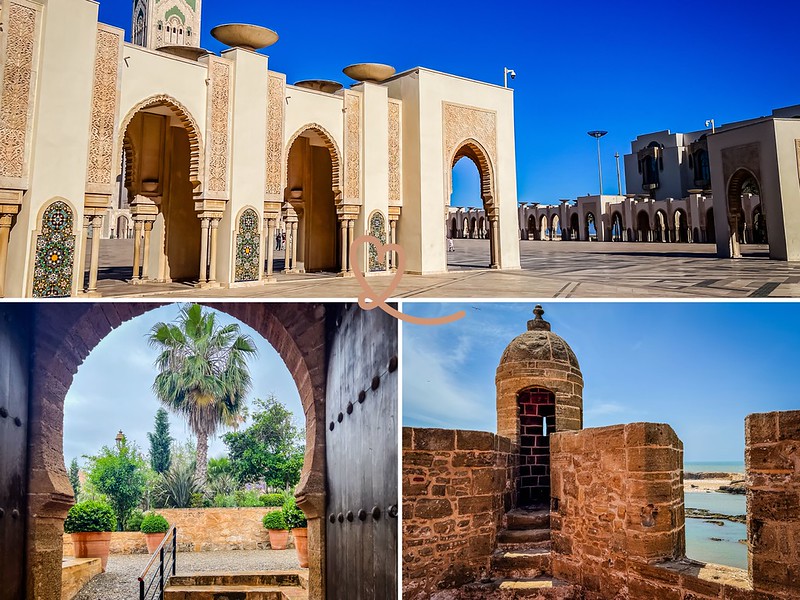
Morocco sits at a rare cultural crossroads — North African, Arab, Berber, French, Spanish, and Andalusian influences all live side by side in a single country. The result is something you won’t experience anywhere else on earth.
In the space of a 7-day trip, you can experience:
- Four imperial cities — Marrakech, Fes, Meknes, and Rabat — each with centuries of dynastic history
- The Sahara Desert — endless golden dunes, traditional Berber camps, and skies thick with stars
- The Atlas Mountains — dramatic peaks, hidden Berber villages, and panoramic mountain passes
- The Atlantic and Mediterranean coasts — laid-back surf towns, fishing harbors, and seafood feasts
- Ancient medinas — UNESCO-listed labyrinths where artisans still work the same trades their ancestors did 1,000 years ago
And it’s all within a country smaller than the state of Texas. The diversity is what makes Morocco unforgettable.
When Is the Best Time to Visit Morocco?
Morocco is a year-round destination, but the experience changes dramatically depending on when you go.
Spring (March–May) — The Best Overall Time
This is the sweet spot. Temperatures are mild across the country, the landscapes are green, the Valley of Roses is in full bloom (peak rose harvest is in May), and the Sahara is warm but not punishing.
Best for: First-time visitors, photographers, hiking, desert trips.
Autumn (September–November) — A Close Second
Summer crowds have left, prices drop, and the weather is comfortable everywhere — including the desert. October is one of the best months of the entire year to visit.
Best for: Quieter trips, value travelers, all-around comfort.
Winter (December–February) — The Off-Season Wildcard
Marrakech and the southern desert remain pleasant during the day (15–22°C), but nights in the Sahara get genuinely cold and the High Atlas can be snowed in. Coastal cities are mild but rainy.
Best for: Budget travelers, those who don’t mind cold desert nights, photographers wanting empty medinas.
Summer (June–August) — Hot and Touristy
Marrakech and the interior cities can hit 40–45°C. The Sahara is unbearable during the day. The Atlantic coast (Essaouira, Tangier) and the High Atlas Mountains, however, remain comfortable.
Best for: Coastal trips, mountain trekking. Avoid: the desert and inland cities unless you handle heat well.
💡 Insider tip: If you can choose, target April–early May or October. These months combine ideal weather, manageable crowds, and the best photographic light.
How Long Do You Need in Morocco?
The honest answer depends on what you want to see. Here’s a realistic breakdown:
| Duration | What You Can Cover |
|---|---|
| 3–4 days | One region only — usually Marrakech + a short desert trip |
| 5–7 days | Marrakech + Sahara + Atlas + one imperial city |
| 8–10 days | Full imperial circuit + Sahara + Chefchaouen |
| 12–15 days | Everything — including the Atlantic coast |
If this is your first trip, we strongly recommend at least 7 days. Anything less and you’ll spend most of your trip in transit.
For travelers with limited time, a guided private tour eliminates the planning, the navigation, and the wasted hours. Our 7-day private tour from Casablanca to Marrakech covers the essentials — imperial cities, Chefchaouen, the Sahara, and Marrakech — without rushing.
The Must-Visit Destinations in Morocco
Marrakech — The Red City
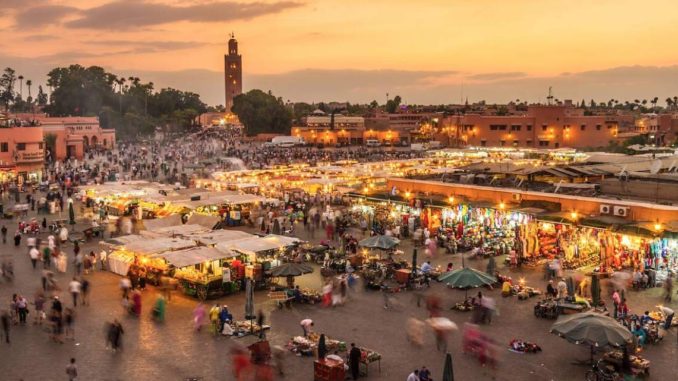
Morocco’s most famous city for good reason. The Jemaa el-Fnaa square, the souks of the medina, the gardens of Majorelle, and the rooftop terraces at sunset are the kind of experiences that stay with you for life. It’s overwhelming, intoxicating, and unforgettable.
Don’t miss: Jemaa el-Fnaa at dusk, Bahia Palace, Majorelle Garden, the leather and spice souks.
Fes — The Spiritual Capital
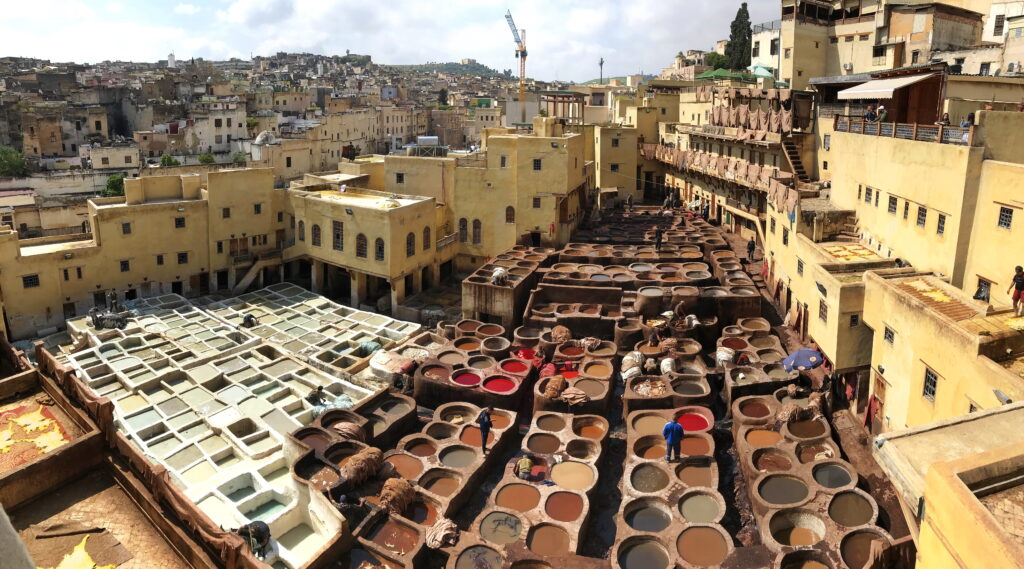
If Marrakech is the spectacle, Fes is the soul. Founded in 789 AD, Fes el-Bali is the largest car-free urban area in the world — 9,000+ alleys, working tanneries, ancient madrasas, and the oldest continuously operating university on earth (Al Quaraouiyine, founded in 859 AD).
Don’t miss: Chouara Tanneries, Al Attarine Madrasa, Bou Inania Madrasa, the medina by day, the rooftops at sunset.
The Sahara Desert (Merzouga)
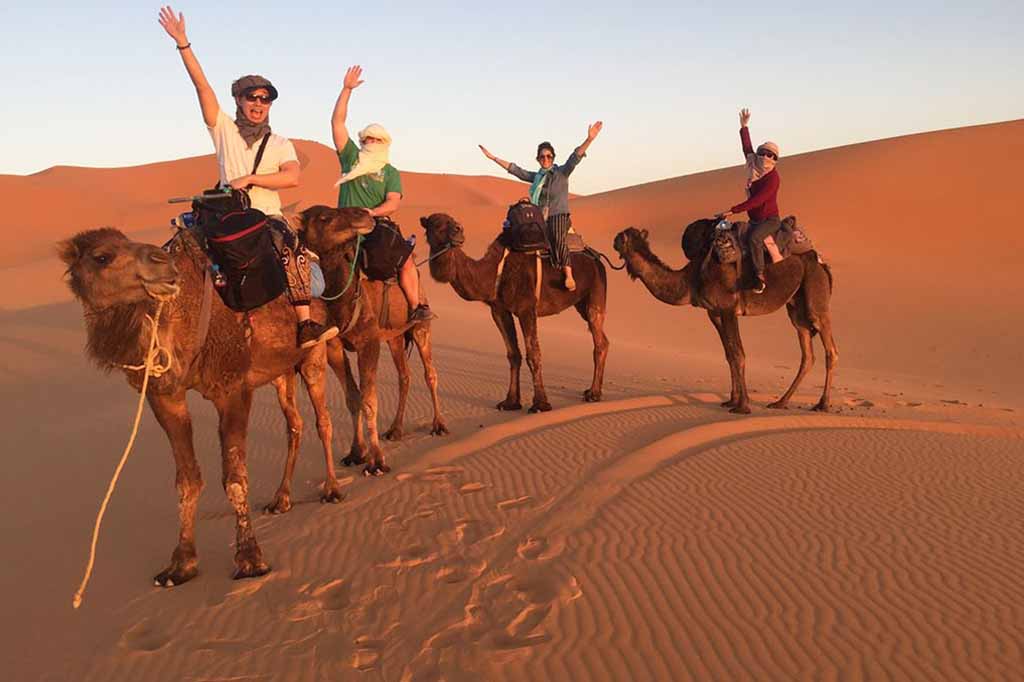
The dunes of Erg Chebbi are the Morocco of dreams — 150-meter-tall waves of golden sand stretching to the horizon. A camel trek into the desert, a night in a Berber camp, and a sunrise over the dunes will likely be the most memorable part of your entire trip.
Chefchaouen — The Blue Pearl
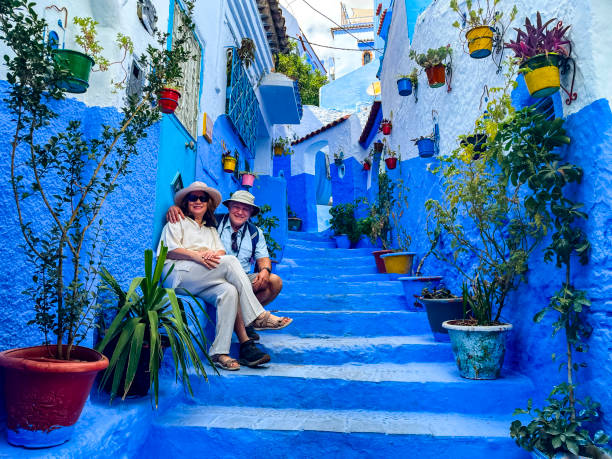
A small mountain city in the Rif where every wall, door, and stairway is painted in shades of blue. Quiet, photogenic, and completely unique — Chefchaouen is the kind of place where you slow down without trying.
Rabat — The Elegant Capital
Often skipped by tourists rushing between Marrakech and Fes, Rabat is Morocco’s quiet jewel. The Hassan Tower, the Mausoleum of Mohammed V, the blue-and-white Oudayas Kasbah overlooking the Atlantic — it’s a city that rewards slow exploration.
Aït Benhaddou — The Desert Fortress
A UNESCO World Heritage Site and the most photographed kasbah in Morocco. Its red earthen towers have served as a backdrop for Gladiator, Game of Thrones, The Mummy, and dozens of other productions.
Essaouira — The Atlantic Escape
A windswept coastal city with a UNESCO-listed medina, 18th-century sea ramparts, blue fishing boats, and the freshest grilled sardines in Morocco. The pace is slower, the wind is constant, and the atmosphere is unlike anywhere else in the country.
How to Get to Morocco
By Air
Morocco has three major international airports:
- Casablanca (CMN) — Mohammed V International, the country’s main hub
- Marrakech (RAK) — Morocco’s tourism gateway, the most common arrival for travelers
- Rabat (RBA) — Smaller, useful if you’re starting your tour in the capital
Most travelers arrive via Casablanca or Marrakech. Direct flights are available from most major European cities, the Middle East, and North America (mostly via Casablanca).
From Europe by Ferry
Tangier is just 14 km from Spain and can be reached by ferry from Tarifa or Algeciras in under an hour. A great option for travelers already in Europe.
Getting Around Morocco
You have three real options:
Trains (ONCF)
Morocco’s train network connects Casablanca, Rabat, Fes, Meknes, Marrakech, and Tangier. The high-speed Al Boraq line (Casablanca-Tangier) is one of the fastest in Africa.
Pros: Comfortable, affordable, scenic. Cons: Doesn’t go to the desert, Chefchaouen, or smaller destinations.
Private Tours with a Driver
For most travelers — especially first-timers — this is the only way to see Morocco properly. You skip the planning, the language barriers, the navigation, and the wasted hours figuring out logistics.
A driver-guide handles the routes, the timing, the accommodations, and the cultural context. You focus on the experience.
This is exactly what we do at HB Morocco Tours. Our 10-day private tour from Casablanca covers the entire country — Sahara, imperial cities, mountains, and coast — entirely private, fully guided.
Buses (CTM and Supratours)
Reliable, affordable, and surprisingly comfortable. A solid backpacker option, but you’ll lose flexibility and a lot of time.
How Much Does a Trip to Morocco Cost?
Morocco is one of the best-value destinations in the world. Here’s a realistic daily budget per person:
| Budget Level | Daily Cost (per person) | What It Covers |
|---|---|---|
| Budget | $30–$60 | Hostels, street food, public transport |
| Mid-range | $80–$150 | 3-star riads, restaurants, private transfers |
| Comfort | $150–$300 | Boutique riads, private guide, full-board meals |
| Luxury | $300+ | 5-star riads, luxury desert camps, private chauffeur |
A private 7-day tour (transport, mid-range accommodations, breakfast, dinner, guide) typically runs $700–$1,200 per person, depending on the season and the level of comfort.
What to Pack for Morocco
Morocco is a Muslim country, but it’s also a tourist-friendly one. You don’t need to dress conservatively, but modest clothing is appreciated — especially outside Marrakech and the coastal cities.
Essentials
- Lightweight clothing that covers shoulders and knees
- A light scarf or shawl (women) — useful for mosques, sun protection, and dust
- Comfortable walking shoes — medina cobblestones are no joke
- A warm layer — desert nights can drop to 5°C even in summer
- Sunglasses, hat, sunscreen — the sun is intense
- A reusable water bottle
- A small daypack
- A power adapter (Morocco uses European Type C/E plugs)
For the Sahara
- A warm jacket, scarf, and hat for evenings
- Closed shoes for camel riding
- A headlamp or small flashlight
Is Morocco Safe for Tourists?
Yes — Morocco is one of the safest countries in North Africa and the Middle East for tourists. Violent crime is rare, the government takes tourism seriously, and there’s a visible police presence in major cities.
That said, like anywhere, you should:
- Watch for pickpockets in crowded medinas
- Be firm but polite with persistent vendors and “guides” in the souks
- Avoid walking alone in unlit areas late at night
- Negotiate taxi fares in advance
Solo travelers, including solo female travelers, regularly visit Morocco safely — but for first-timers especially, a private guided tour eliminates most of the friction and lets you enjoy the country without constantly navigating it.
Cultural Etiquette — What to Know Before You Go
- Greetings matter. A simple “Salam Alaikum” (peace be upon you) goes a long way.
- Use your right hand for eating, greeting, and passing items.
- Dress modestly when visiting religious sites or rural areas.
- Ask before photographing people, especially in rural areas and souks.
- Tipping is expected — 10% in restaurants, small change for porters and guides.
- Bargaining is normal in souks — start at 30–40% of the asking price.
- Friday is the holy day — some shops close around midday prayers.
- Ramadan affects opening hours and daytime dining options if you visit during the holy month.
Food You Have to Try in Morocco
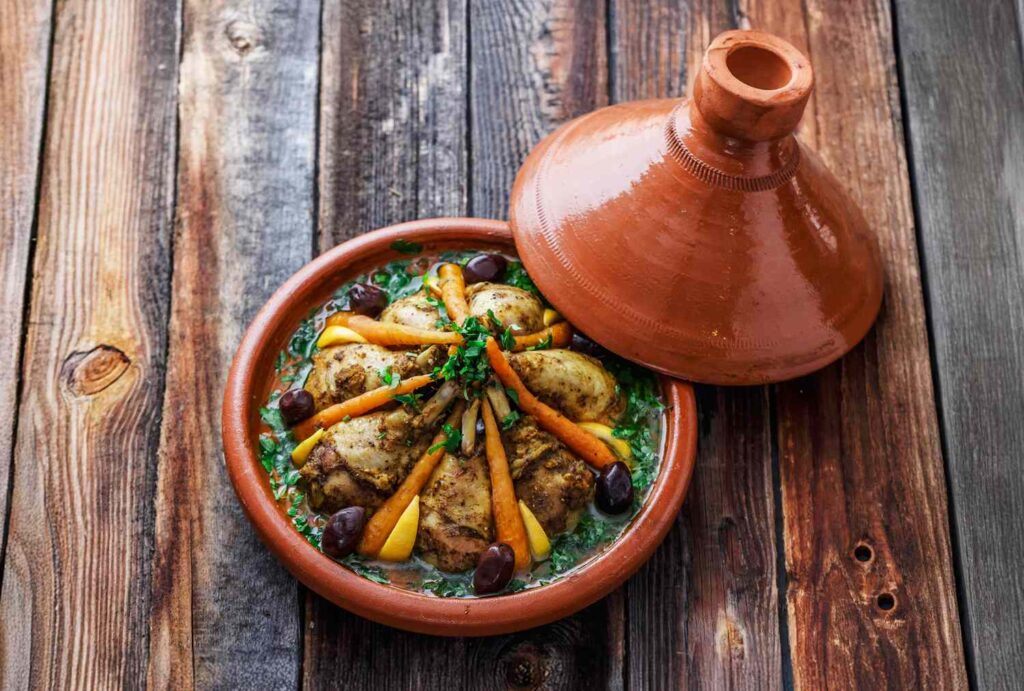
Moroccan cuisine is one of the great culinary traditions of the world. Don’t leave without trying:
- Tagine — slow-cooked stews of lamb, chicken, or vegetables with preserved lemon, olives, and spices
- Couscous — traditionally served on Fridays
- Pastilla — a sweet-savory pie of pigeon or chicken with cinnamon and powdered sugar
- Harira — a hearty tomato-lentil soup, especially popular during Ramadan
- Mechoui — slow-roasted lamb, fall-off-the-bone tender
- Mint tea — the national drink, poured from a height into small glasses
- Fresh orange juice — sold everywhere for almost nothing
- Moroccan breakfast — msemen (flaky flatbread), beghrir (honeycomb pancakes), olives, fresh bread, and amlou (almond-argan-honey spread)
Common Mistakes First-Time Visitors Make
- Trying to see everything in 4 days. You can’t. Choose a region and go deep.
- Skipping the desert. It’s the highlight of any Morocco trip. Don’t miss it.
- Underestimating distances. Morocco looks small on a map. The roads through the Atlas are slow and winding.
- Booking everything separately. Logistics in Morocco are complex. A guided private tour costs about the same and saves you days of stress.
- Overpacking. You’ll regret every kilo when navigating medinas with cobblestones and stairs.
- Not learning a few words of Arabic or French. Even bonjour, shukran (thank you), and la, shukran (no, thank you) will transform your interactions.
Frequently Asked Questions
Do I need a visa for Morocco?
Citizens of the US, Canada, UK, EU, Australia, and most other Western countries can enter Morocco visa-free for up to 90 days. Always check your country’s requirements before traveling.
What language do they speak in Morocco?
Arabic and Tamazight (Berber) are the official languages. French is widely spoken, especially in business and tourism. English is increasingly common in tourist areas.
Is the tap water safe to drink?
No — stick to bottled or filtered water. Most hotels and riads provide it free.
Can I drink alcohol in Morocco?
Yes — alcohol is legally sold in hotels, licensed restaurants, and supermarkets, though not openly in public. It’s a Muslim country, so consumption is moderate.
What currency does Morocco use?
The Moroccan Dirham (MAD). It’s a closed currency — you can only buy and exchange it inside Morocco. ATMs are widely available.
Do I need travel insurance for Morocco?
Yes, always. Healthcare is decent in cities but private insurance is recommended for emergencies, medical evacuation, and trip cancellation.
Plan Your Morocco Trip with HB Morocco Tours
Morocco rewards travelers who arrive with a plan — and even more so those who arrive with the right people guiding them. At HB Morocco Tours, we craft private, fully guided tours from Casablanca, Marrakech, and Rabat — designed to give you the most authentic experience of Morocco without the stress of organizing it yourself.
Whether you have 4 days or 15, we’ll build the right itinerary for you. Start by exploring our most popular private tours or reach out directly through our contact page to plan your custom trip.
Morocco is calling. It’s time to answer.